
Decora Fashion
Filter
Sort by:

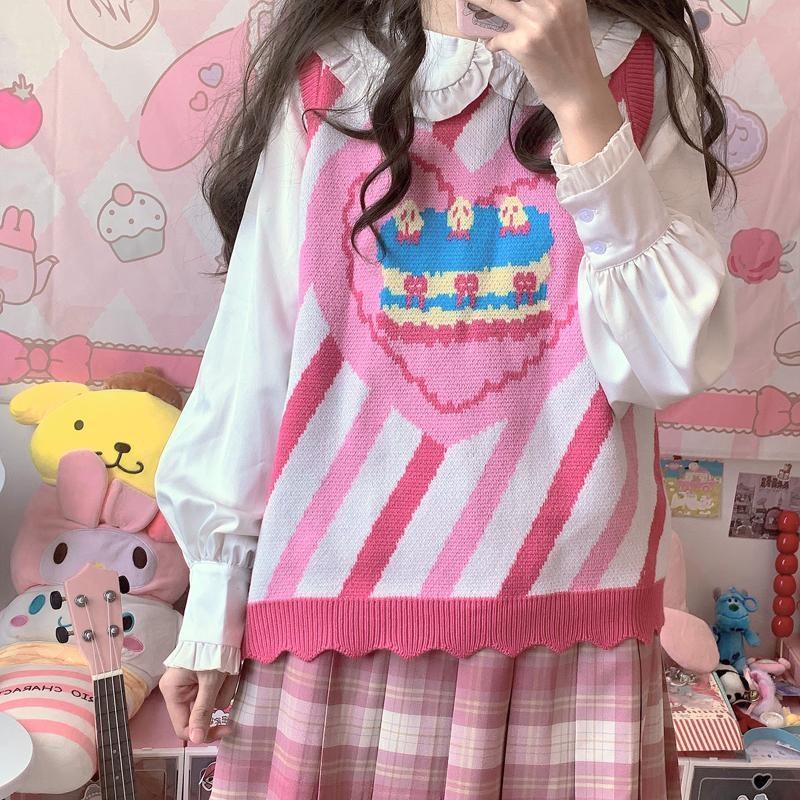
Decora fashion is maximalism with a methodology. Every clip placed deliberately, every layer of color chosen for what it adds to the conversation happening across the entire outfit. Born on the streets of Harajuku in the late 1990s and documented obsessively in FRUiTS magazine, it became one of the most visually distinctive aesthetics Japan ever produced — and one of the most misunderstood outside of it. This collection is not about the costume version. It is about the real thing: pieces with genuine Decora logic, built for people who understand that more is not chaos. More is a composition.
Maximalism as a Precision Sport
The defining misreading of Decora is that it is random. It is not. The accessories are layered with an internal logic — color families that repeat across the look, motifs that rhyme without matching, a deliberate tension between the chaos of quantity and the coherence of palette. A head full of clips in pastel yellow, cream, and soft orange, worn against a base of white and blush, is not an accident — it is an argument. The pieces here are selected for their ability to participate in that kind of thinking: accessories and clothing that hold up to being assembled into something larger than the sum of their parts.
The Base Layer Underneath the Clips
Decora dressing begins with the foundation before the layers arrive. An oversized cotton tee in a pale solid, a pleated micro skirt in cream or sherbet yellow, platform sneakers that add height without demanding attention — the base exists to receive the accessories rather than compete with them. Getting that foundation right is what separates a Decora coord that reads as intentional from one that simply reads as busy. The clothing here is chosen with that distinction in mind: pieces with enough presence to anchor the look but enough restraint to let the layering do its work.
Color Logic in a Decora Coord
Color in a Decora outfit does not operate the way it does in other aesthetics. The palette is wide — sometimes six or seven tones across a single look — but it stays within a frequency. Pastels do not fight primary brights; they share a certain luminosity that makes them legible together. A candy-pink cardigan worn with a mint skirt and lemon accessories reads as cohesive in Decora terms because all three tones belong to the same light register. Understanding that register — and working within it rather than against it — is what the most compelling Decora looks have always had in common.
Accessories as the Entire Point
In most fashion contexts, accessories finish an outfit. In Decora, they are the outfit — or at least coequal with the clothing in determining whether the look actually works. Hair clips by the dozen, layered plastic jewelry, plush charms in quantities that would seem excessive in any other context: these are the vocabulary. The pieces here are curated for that role. Not as add-ons but as central elements of a coord — items chosen because they know exactly what they are supposed to do and do it with the kind of exuberant clarity that only Decora demands.
Decora Fashion and the Harajuku Tradition It Carries Forward
Decora fashion did not emerge in isolation. It arrived as part of a broader moment in Harajuku when multiple aesthetic subcultures were coexisting, cross-pollinating, and being documented by a generation of photographers and editors who understood they were watching something genuinely new. Gothic Lolita on one corner, Gyaru on the next, Decora filling the space between with candy-colored maximalism that refused to be serious about anything except its own internal rules. That history is still present in every coord assembled with real Decora logic — and in every piece chosen with that lineage in mind.
Decora kei fashion and the rules underneath the accessories
Decora kei fashion operates within a surprisingly rigorous internal logic — one that only becomes visible once you have spent enough time studying the archive. The clips must rhyme, not match. The colors must share a luminosity rather than a hue. The base layer must disappear into the accessories without vanishing entirely. These are not written rules but they are real ones, maintained by a community that has always understood the difference between a Decora coord that works and one that simply has a lot going on. The pieces here are chosen because they understand that difference.
Decora harajuku fashion as a living street document
What made decora harajuku fashion so compelling in its original context — and what still makes it compelling now — is that it was always a street practice first. Not runway-derived, not brand-driven, but assembled by individuals on the ground in Ura-Harajuku with a genuine investment in the visual outcome. FRUiTS magazine captured it best: looks that were clearly personal, clearly deliberate, and clearly in conversation with each other without ever being identical. The pieces here are sourced with that spirit — items that participate in a tradition of individual expression rather than replicate a template.
Decora japanese fashion between archive and now
Decora japanese fashion exists in a particular temporal tension: deeply rooted in a specific late-90s and early-2000s Harajuku moment, but carried forward by a new generation that wears it as a living practice rather than a recreation. The visual codes remain — the layered clips, the pastel density, the platform silhouette — but they are inflected now by contemporary references, by global community, by the particular way an aesthetic evolves when it is genuinely loved across time. The collection here exists within that continuity.
Pastel decora fashion and the softness within the maximalism
Pastel decora fashion is the register where the aesthetic meets something more cloud-like and dreamy — where the quantities remain but the palette softens into blush, lavender, mint, and cream. It is Decora at its most approachable without being any less deliberate: baby blue hair clips layered over a cotton coord in dusty rose, plush accessories in off-white and peach, the whole look held together by a palette that has decided, very firmly, to be soft. These pieces live in that space — maximum in quantity, minimal in aggression.
Decora fashion japan and the geography of a style
Understanding decora fashion japan means understanding the specific geography that produced it. The narrow streets of Ura-Harajuku, the vintage and second-hand shops of Shimokitazawa, the basement accessory stores in Shinjuku where a single wall might hold three hundred hair clips sorted by color family — these places shaped the aesthetic in ways that cannot be separated from its visual outcome. Knowing that context does not make a coord more authentic, but it makes it more interesting to build. It gives the layering something to mean beyond the immediate visual effect.
Decora is one of the few aesthetics that genuinely rewards commitment — not to a particular look, but to the practice of assembling one with care. The more time you spend inside its logic, the more legible it becomes, and the more satisfying it is to get right. Explore the darker edge of Japanese street style in our yami kawaii collection, or browse the wider universe in kawaii clothing — and keep building the coord that knows exactly what it is doing.


